Wednesday, August 14, 2013
Physics apps - sound 1
Android phones (smartphones) and tablets can both detect sound (mike) and produce sound and can thus make useful tools for sound experiements. So far the writer has seen apps for measuring sound loudness (in dB), analysing sound frequency and generating sounds of a specific frequency. Specific apps are used as examples. There are often many similar apps and I cannot guarantee that I found the best.
Measuring sound loudness - the app Sound Meter (Lite) shows the loudness on a meter-type display along with max and min values. Also displayed is a real time graph. The maximum sound loudness is 82dB on my tablet - this is a limitation and varies with hardware brand and model. I noticed that the sound of heavy rain on a metal roof maxed out the meter at 82dB.
More in another post.

Sunday, June 30, 2013
Tabletop particle accelerator
Not really new physics in this news item but new technology which provides a new tool for science.
'Physicists at The University of Texas at Austin have built a tabletop particle accelerator that can generate energies and speeds previously reached only by major facilities that are hundreds of meters long and cost hundreds of millions of dollars to build.'Lots of good physics in this to discuss. Our university should have one of these in 5-10 years...
Wednesday, May 29, 2013
Smartphone sensor - accelerometer
.png/220px-Front_view_of_Nexus_7_(cropped).png)
"The first thing students noticed that was strange is that even when the phone was sitting completely still, which should be an acceleration of zero, the phone would read an acceleration in the vicinity of 10 m/s2. "See the article for the explanation.
Thursday, April 25, 2013
Smartphone sensor physics
Having just bought a good android tablet my appreciation of the value of the sensors for physics practical work has greatly increased. Just a discussion of how the sensors work can be the basis for several lessons. Of course smartphones and tablets vary in terms of the sensors included and even of how a given sensor works so the teacher needs to do some research first.
Common sensors may include:
Microphone (audio sensor)
Camera
Ambient light sensor
Screen (touch sensor)
Proximity sensor
Wifi (wifi sensor)
Accelerometer
Magnetic field sensor
Location sensor (GPS/wifi)
Here are two articles which give a short introduction to the subject. I have not yet found anything comprehensive. I expect to post more about this later.
Sensors used in Smartphone - a brief overview
Mobile devices gather piles of data that you may actually find helpful - describes how the accelerometer can be used
For apps look for terms such as lightmeter, sound meter, metal detector, accelerometer.
Wednesday, March 27, 2013
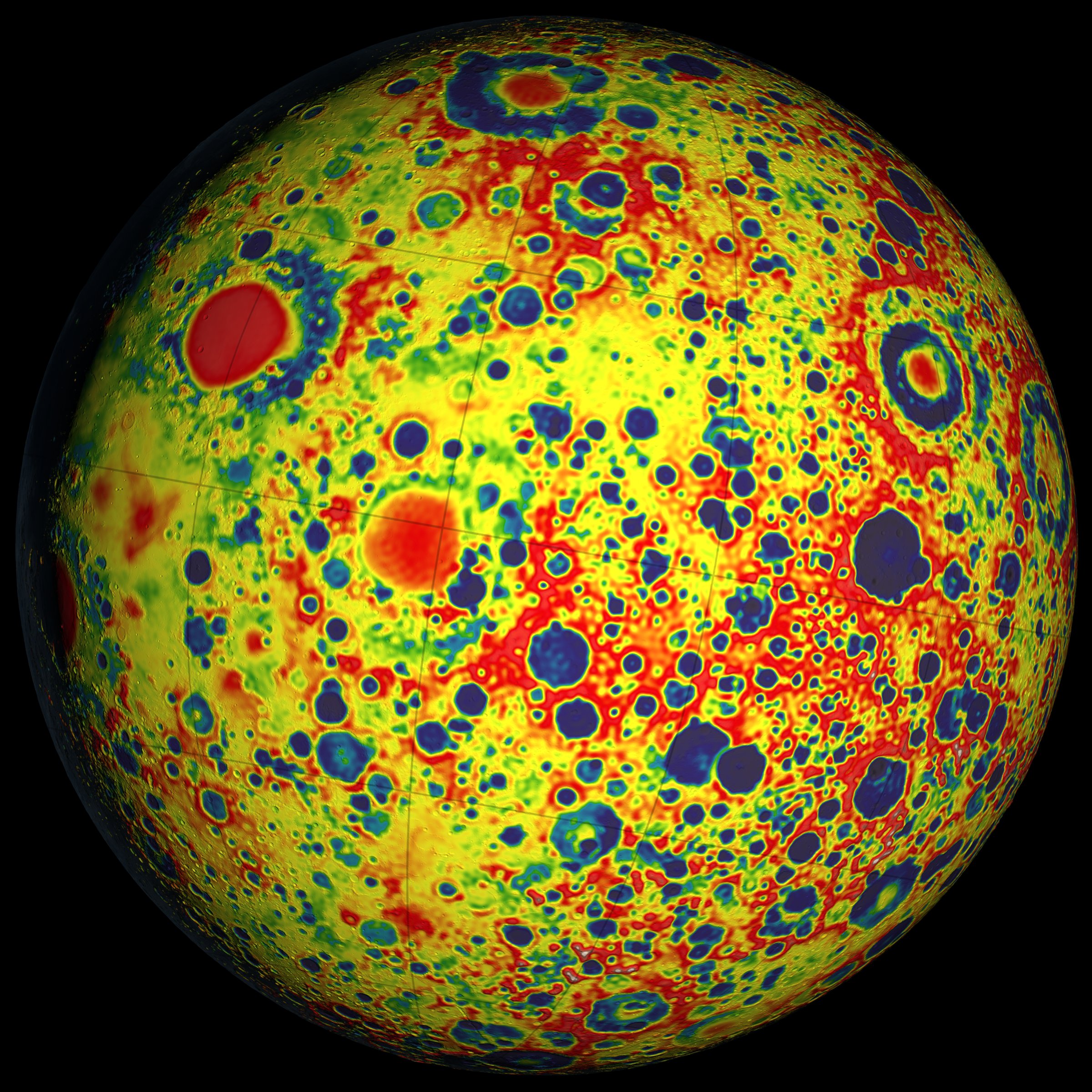
Mapping mass on the moon
Thursday, February 28, 2013
Friday, January 11, 2013
Diffraction at home

Here is a photo at the right. You can see the coloured fringes speading out from the light in the vertical and horizontal directions, four sets in all. The bottom one is clearest. They are clearer in reality than they are in the photo.
Subscribe to:
Posts (Atom)